
For investors, the U.S. has been the place to be in recent years.
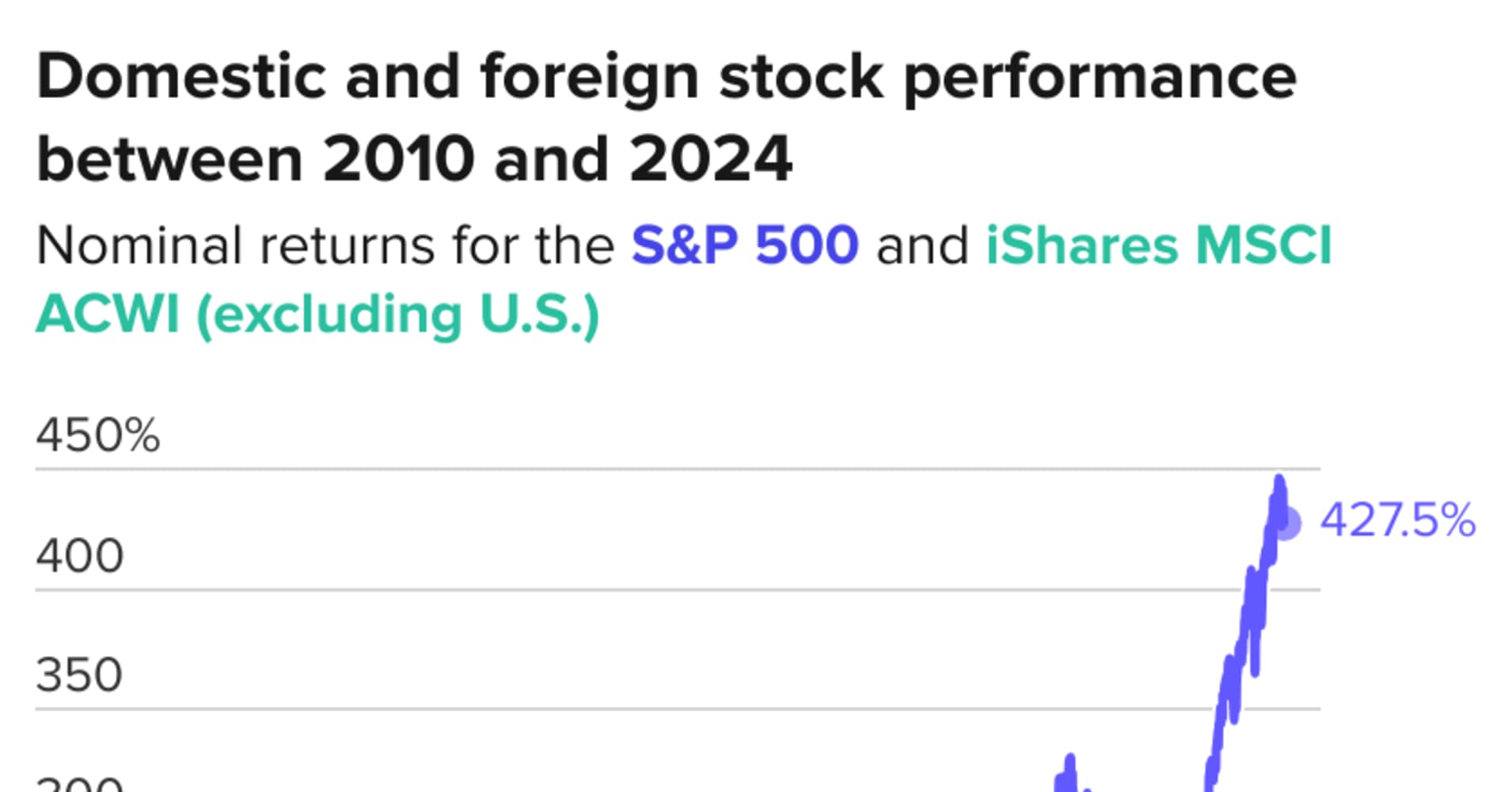
Over the past decade and a half, the S&P 500 — a measure of the broad U.S. stock market — has returned an annualized 14.2%. The MSCI ACWI ex-USA index, which measures the performance of stocks from pretty much everywhere else, logged a return of 6.5% over the same period.
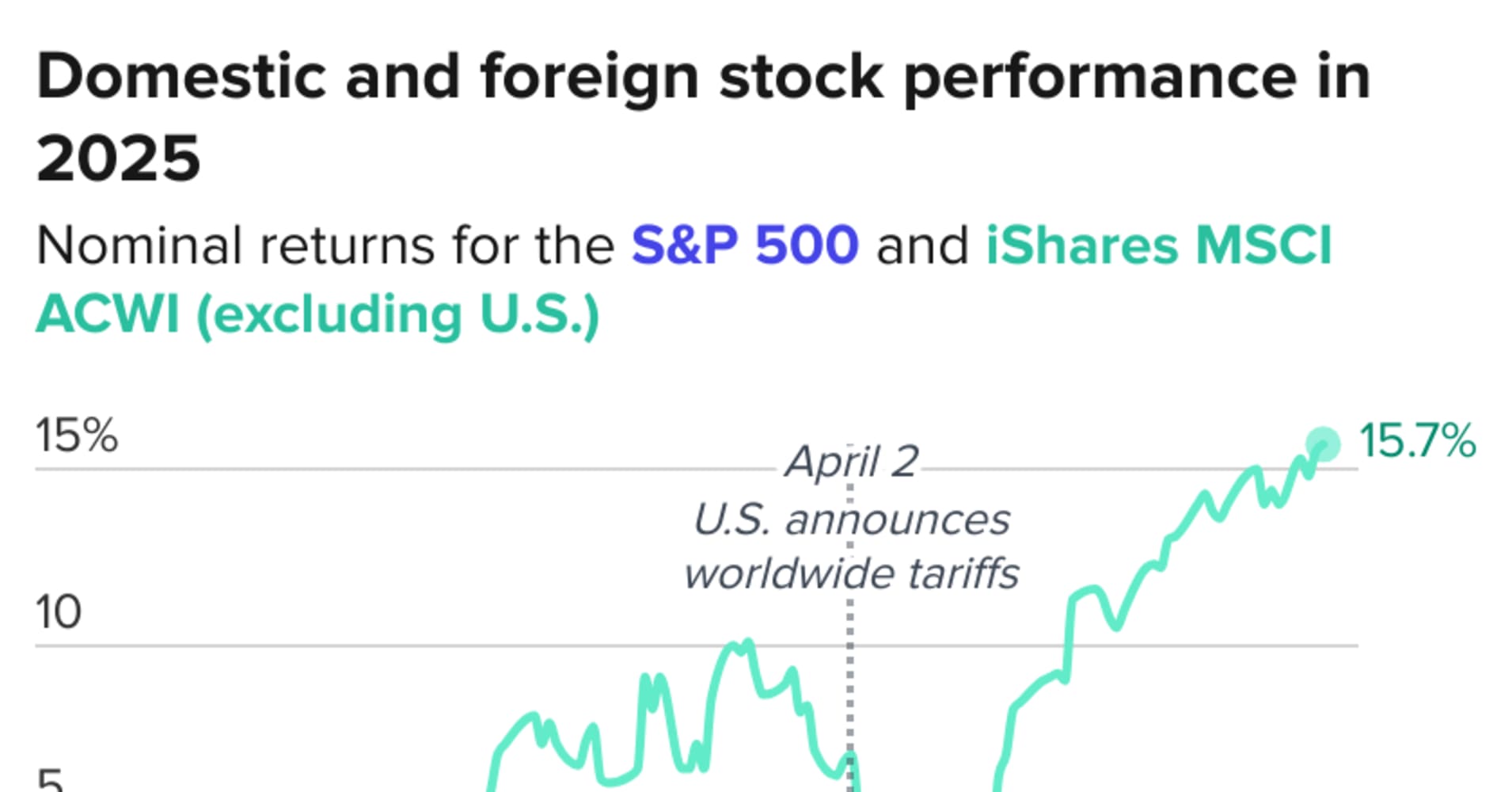
Since the start of 2025, however, investors are eschewing U.S. stocks in favor of international names. So far this year, the ACWI ex-USA index has returned 15.7%, trouncing the 1.5% return in the S&P.
"In 2025 thus far, there are some clear indications that investors are adopting the 'ABUSA' ('Anywhere But the USA') mindset," says David Rosenstrock, a certified financial planner and director of financial planning and investments at Wharton Wealth Planning.
"This shift is partly driven by concerns over market volatility in the U.S., uncertainty regarding policies and relatively weaker performance compared to global counterparts," he says.
So is it time to invest in foreign stocks?
Yes and no, say financial pros. You shouldn't make any wholesale changes to your portfolio mix based on short-term market results, they say. But if you have little or no foreign exposure, diversifying is likely a savvy move over the long term. Here's why.
U.S. stocks don't always lead
If you were born in the 90s, you may have never been invested during a sustained period during which foreign stocks outperformed domestic names, as they did in the back half of the 80s and much of the early 2000s . If that's the case, you may be tempted to continue ignoring foreign stocks, even after the recent uptick.
"The problem is those trends tend to tend to reverse over time," says Amy Arnott, a portfolio strategist at Morningstar. "So even if the U.S. is outperforming over a very long period, like it did [in the 15 years] through 2024, eventually that trend reverses."
While it may feel like the U.S. has dominated stock markets forever, it wasn't that long ago that foreign firms were delivering better returns. From 2001 to 2010, for instance, the ACWI ex-US index submitted a cumulative total return of 71.5% compared with a 15% gain in the S&P 500.
Adding some foreign stocks to your portfolio can help guarantee at least some exposure to whichever side is performing better over the many years you're likely to invest.
"True diversification means tapping into different economic cycles, monetary policies and growth drivers. It offers exposure to unique industries," says Marcos Segrera, a CFP and principal at Evensky & Katz/Foldes Wealth Management. "Furthermore, owning foreign stocks is a crucial way to diversify away from U.S.-specific risks."
How to add international stocks to your portfolio
If you're looking to invest in foreign stocks, the most effective way to do it is by adding a low-cost index mutual fund or exchange-traded fund, says Arnott.
"That way, you can get international diversification in one package and get exposure to a large number of companies and countries outside of the U.S.," she says.
Market watchers generally divide foreign stocks into two camps: those that come from "developed" economies, such as those in Japan, Australia and several European countries, and emerging markets, such as China, India and much of Latin America.
You can buy funds which invest in either, but "to keep things simple," owning a "total international stock" fund — such as one that tracks the MSCI ACWI ex-USA or something similar — will get you exposure to both, says Arnott.
And while you may have powerful convictions about the future of a particular country and its economy, you'd be wise to avoid tilting your foreign exposure too much in that direction, Arnott says. Putting all your eggs in one country or region's basket, she says, can result in big swings in your portfolio.
"It can be tempting to do that when there's a lot of excitement about Asia Pacific stocks or Latin America, or things like that," she says. "But it's difficult to use those types of funds in a portfolio just because they are more volatile, more narrowly defined, and people unfortunately have a tendency to sometimes see performance over the past few years and buy in at the wrong time."
Are you ready to buy a house? Take Smarter by Make It's new online course How to Buy Your First Home . Expert instructors will help you weigh the cost of renting vs. buying, financially prepare, and confidently navigate every step of the process—from mortgage basics to closing the deal. Sign up today and use coupon code EARLYBIRD for an introductory discount of 30% off $97 (+taxes and fees) through July 15, 2025.
Plus, sign up for Make It's newsletter to get tips and tricks for success at work, with money and in life, and request to join our exclusive community on LinkedIn to connect with experts and peers.
Comments
Post a Comment