
At its most basic, creating a retirement budget is all about money in vs. money out.
You figure out what kind of income you can reliably generate from your combined assets, then compare it against your household spending. If income surpasses spending, you’re set. If not, you need to make some adjustments.
Need help creating a comprehensive financial plan for retirement? Speak with a fiduciary financial advisor today .
But packed inside that simplicity are countless moving parts. Managing your income involves investment, risk analysis, longevity issues and much more. Managing your spending involves assumptions about housing, insurance, lifestyle, inflation and (again) much more.
To see how this works, let’s imagine a hypothetical couple at age 60. They have a combined $1.3 million in their 401(k)s and can expect $5,100 per month in combined Social Security. This lends itself to a generous income, so spending is less likely to be a problem with even moderately comfortable lifestyle spending.
So, here are some of the factors that will influence the income side of their budget.
Building an Income Plan
From an income standpoint, our hypothetical couple is doing quite well.
At $2,550 per person, their eventual monthly Social Security benefits will be well above the average retirement benefit of $1,976 per month as of January 2025 .
So this household will start with a guaranteed $61,200 per year from benefits alone when they retire. But the real assets are this couple’s 401(k)s. Here, we have two people with $1.3 million across their 401(k) plans. They’re also only 60 years old. Assuming they wait until full retirement age to collect their benefits and retire, that gives their 401(k)s seven more years of investment and growth.
Of course, how much they’ll have in their 401(k)s at the end of those seven years will depend on their investment strategy and market performance. However, here’s a look at how much money they could potentially have if their portfolio grew by rough historical averages:
- All bonds ( average annual return of 4%): $1.7 million
- Mixed bonds and equities ( average annual return of 8%): $2.2 million
- S&P 500 index fund (average annual return of 10%): $2.5 million
Even using conservative assumptions, our couple could potentially have a significant nest egg by the time they retire in seven years.
For example, take the 8% middle ground approach with a potential $2.2 million by retirement. A 4% annual withdrawal rate would generate $88,000 of pre-tax income per year. With their Social Security benefits, that might generate a combined $149,200 of pre-tax, inflation-adjusted income.
This number will range widely depending on the couple’s actual investment choices and withdrawal strategies. In all cases, though, it’s likely that they could retire on a solid six-figure income.
Creating an sustainable income plan in retirement is important, yet potentially complicated work. Fortunately, that’s where a financial advisor with retirement planning expertise can help.
Taxes and RMDs
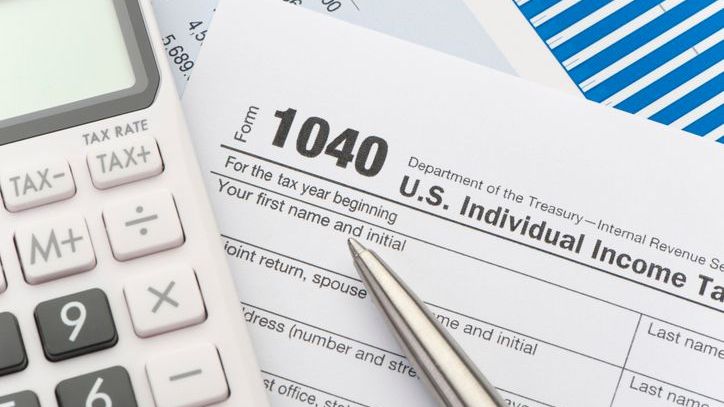
Taxes are the next challenge to tackle when putting together a retirement income plan and budget.
While taxes aren’t unique to retirement, they do get more complicated. Most households spend their working lives with one, simple tax status. You earn a W-2 income, pay income taxes through withholding, then file a basic 1040 and get a refund.
In retirement, your tax status diversifies. Among other possible situations, you need to anticipate income taxes on tax-deferred portfolios , taxes on Social Security benefits, as well as capital gains and income taxes on any taxable portfolios you may have. You need to balance that with untaxed income from any Roth portfolios, and plan for how you will make payments on all those taxes.
A financial advisor can potentially help with all of that, and managing it will matter.
Take our example above. The couple might collect $88,000 of pre-tax income from their 401(k)s. After income taxes, they’d be left with approximately $81,200. Up to 85% of their Social Security benefits would also be taxable.
Taxes also can intersect with your budget in the form of RMDs. These are your required minimum distributions , the amount you must withdraw from your pre-tax portfolios each year starting at age 73 (age 75 if you turn 74 after Dec. 31, 2032). Roth portfolios are exempt from this requirement.
Even if you don’t need all of your money – say that your lifestyle is minimal and your needs are few – the IRS still requires you to take this withdrawal and pay taxes on it.
Longevity, Inflation and Insurance

Then, anticipate the long-term issues that can affect your income, including longevity, inflation and health.
During your working life, you generally don’t need to budget for decades down the road. Your household income will hopefully adjust to meet the needs of any given era. In retirement that changes. You need to think in 20-, 30- or even 40-year terms.
This is an issue known as “ longevity risk .” It’s the chance that you outlive your retirement savings and have to rely on Social Security in your later years. In particular, given unpredictable advances in medicine and aging, the younger you are the more you need to plan for this.
You can potentially mitigate this risk by planning for more years than you will need. Take a realistic life span – mid- to late-80s for a median retiree – and then budget for an even longer one.
For example, instead of planning for a 25-year retirement by drawing down $88,000 in their first year of retirement (and then adjusting it upward for inflation each year after that), our couple might anticipate starting out with a lower initial withdrawal. This could help them stretch their money to 35 years. It will reduce their spending capacity modestly, in exchange for ensuring that their 90th birthdays will be something to celebrate.
If you’re unsure how long of a retirement you should plan for, or simply need help building an income plan, consider working with a financial advisor .
Thinking in decades also means planning for inflation .
Even at a 2% rate of inflation, prices double about every 35 years. For people who live in cities, and especially for those who rent their homes, prices will increase even faster. The more fixed your income, for example with low-return investments, pensions or annuity payments, the more these rising costs will affect your lifestyle. Plan for this, to make sure that your budget doesn’t get tighter while your income stays the same.
Finally, prepare for new insurance needs. Retiring means starting to plan for higher health care costs as life goes on. Especially for people used to spending their lives relatively young and healthy, meaning most retirees, that can come as a surprise. Structural costs like gap and long-term care insurance will reduce your spendable income, and you want to be prepared for it.
Bottom Line
Creating a retirement budget is a process of balancing your income against your spending needs. Even households that can anticipate a relatively generous income need to make sure they plan for the many factors that can influence this, from investment returns to taxes, insurance and inflation.
Tips for Managing Inflation in Retirement
- The biggest problem with planning for inflation is that it is not one number. Although the government does publish its headline numbers each month, local inflation is different across communities and lifestyles. Make sure you account for this potential variance , otherwise prices might take even a well-planned retirement by surprise.
- A financial advisor can help you build a comprehensive retirement plan that aims to protect your income from inflation. Finding a financial advisor doesn’t have to be hard. ’s free tool matches you with vetted financial advisors who serve your area, and you can have a free introductory call with your advisor matches to decide which one you feel is right for you. If you’re ready to find an advisor who can help you achieve your financial goals, get started now .
- Keep an emergency fund on hand in case you run into unexpected expenses. An emergency fund should be liquid -- in an account that isn't at risk of significant fluctuation like the stock market. The tradeoff is that the value of liquid cash can be eroded by inflation. But a high-interest account allows you to earn compound interest. Compare savings accounts from these banks .
- Are you a financial advisor looking to grow your business? AMP helps advisors connect with leads and offers marketing automation solutions so you can spend more time making conversions. Learn more about AMP .
Photo credit: ©iStock.com/Jacob Wackerhausen, ©iStock.com/courtneyk, ©iStock.com/coldsnowstorm
The post We’re 60, Have $1.3 Million in 401(k)s and Will Receive $5,100 Monthly From Social Security. What’s Our Retirement Budget? appeared first on SmartReads by .
Comments
Post a Comment