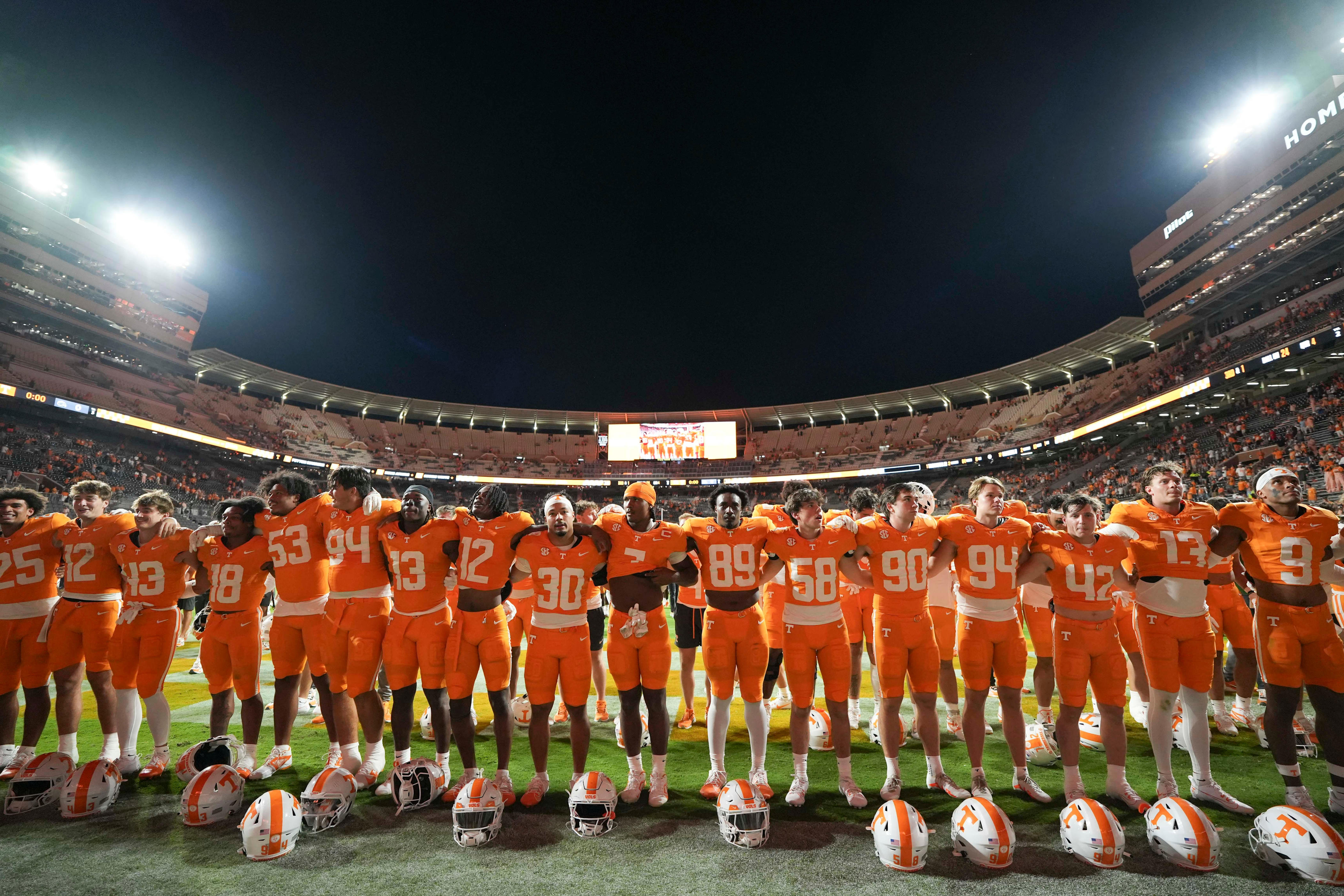
University of Tennessee athletes will be paid revenue directly by the school, beginning July 1, in addition to third-party income they already earn for use of their name, image and likeness.
The revenue sharing era has officially arrived with approval of the House settlement on June 6, which resolved three federal antitrust lawsuits against the NCAA and four power conferences (ACC, Big Ten, Big 12, SEC).
Any NCAA member school opting into the revenue sharing format can pay its athletes up to an annual cap of approximately $20.5 million. That doesn't include third-party NIL pay, which is still allowed.
This is a monumental shift in college sports, which moves even closer to a professional model as the NCAA and major conferences try to avoid further litigation.
Just like the NIL era, which began in 2021, UT will dive headfirst into revenue sharing. Here’s what UT fans need to know about this new system.
There’s a salary cap for each school
There will be a cap of approximately $20.5 million that a school can pay its athletes per academic year. It will be 22% of the average revenue from ticket sales, media rights and sponsorships by power conference schools. That cap will increase each year.
Schools determine which athletes are paid and how much, as long as the total doesn't exceed the cap. Presumably, schools will spread revenue among several players, just like the payroll of a pro team.
Additionally, a player can earn as much NIL money as the market will pay, but those deals must withstand a new vetting process.
Here’s how Tennessee could divide revenue
UT has not disclosed its approach to revenue sharing. But it appears UT, like most SEC schools, will distribute the money according to revenue each sport produces.
A model was prescribed in the preliminary House settlement: Approximately 75% to football players, 15% to men’s basketball, 5% to women's basketball and 5% to other sports (including baseball).
But for many schools like UT, those percentages will be calculated from an $18 million budget instead of $20.5 million, because $2.5 million will count toward new scholarships with increased roster limits. Extra scholarships should attract talented athletes to schools willing to fund them, especially in sports like baseball, soccer, swimming and track, among others.
That model for revenue distribution is just a baseline. Schools will adjust percentages based on need and different strategies, and conferences may set standards for each member school.
Why male, female athletes won’t be paid equally
Lawsuits are anticipated, arguing that revenue should be shared equally among male and female athletes based on Title IX principles for publicly funded universities. An appeal to the settlement on any grounds must be made within 30 days of the decision.
For now, most schools believe it’s riskier to violate guidance from the multibillion-dollar antitrust settlement than violating Title IX. Until there’s clear legal guidance, most schools will pay athletes based on the revenue their respective sport generates.
Also, President Donald Trump’s administration provided cover for that approach by rescinding former President Joe Biden’s Title IX guidance for paying college athletes.
Salary cap doesn’t include NIL
Athletes can still earn NIL money in addition to their share of school revenue. NIL income comes from businesses, boosters and third-party collectives. Revenue shares come directly from the university's athletic budget.
The richest schools and boosters will utilize those two income streams to maximize player pay in a high-dollar arms race to build the most talented rosters.
However, a breaking point could be on the horizon. Athletic department revenue relies on donations and ticket sales. NIL collectives rely on money from those same boosters and fans.
Eventually, supporters could grow tired of paying athletes, especially through two different entities.
That means $20.5 million is the floor, not the ceiling
Because there is no limit on NIL, the estimated $20.5 million cap on revenue will be a starting point for player pay by the richest schools.
Imagine $15 million going to a football roster in revenue, and then another $10 million in NIL pay supplementing those same players. A few schools will lean on wealthy boosters to pull that off, but many others will reach their breaking point. Paying revenue to athletes will be difficult enough. After all, that money must be squeezed out of the athletic budget that was already in place. Tightening the belt could mean cutting sports that generate very little revenue, or reducing staff.
UT’s skyrocketing revenues put it in better shape than most, but every school will face hard decisions.
Tennessee opted in, but not every school will
Athletic department budgets have relied on this revenue for decades. Now they must share a good portion of it with athletes.
It becomes a simple equation: Either cut expenses or increase revenue, or both.
Tennessee gets a revenue bump from increased ticket prices, which includes a “ talent fee ” to aid in player pay. But there also will be budget cuts. That means Danny White , the Sports Business Journal's Athletic Director of the Year, must manage UT's money wisely.
Most power conference schools will opt into revenue sharing. Some mid-major schools won’t be able to afford it. They all have the option to spend well below the cap.
Tennessee athletes will be under contract
UT athletes will sign an agreement to receive a specific amount of revenue from the university, which must be offered and perhaps negotiated.
In theory, players under contract who enter the transfer portal would have to pay a buyout to the school or forfeit a portion of their revenue, but that'll likely meet legal challenges. Almost every college sports rule has been tested in the courts.
Multi-year contracts especially would trigger buyouts, but it’s believed that those will go to only a few star players. After all, schools don't want to commit to too many athletes over multiple years, and vice versa, at least not until the environment appears more stable.
Most revenue-sharing contracts will be one-year deals, at least until schools can settle into long-term strategies. That’s similar to scholarships, which are awarded each year and then routinely renewed.
Schools will try to hide player payroll from public
Schools don’t want media and fans to have access to their payroll. It would invite scrutiny and stir up disputes in locker rooms. That’s why Tennessee lawmakers have been preparing legislation that would keep secret that public money paid to college athletes, and other states are doing the same.
But there’s a reasonable argument that it should be available because athletes will receive money from public institutions. That battle over public records lies ahead.
There will be a cap management database to track how much schools pay players, but it’s still in development. It may track payments by sport or even position. Schools will have access to that data for their own budgeting purposes. But they’d like to keep it from public view.
NCAA won’t police player pay anymore
Power conferences are creating a new enforcement arm, the College Sports Commission, to ensure that schools abide by the athlete compensation rules, Yahoo Sports reported, including the revenue cap and NIL.
A new NIL clearinghouse will vet deals to determine if they are “legitimate, fair market NIL agreements and not being used for pay-for-play,” according to an NCAA memo sent to member schools on Feb. 13.
That could turn NIL into what it was intended to be: Businesses paying athletes for endorsements rather than common fans funding NIL payrolls. But that’s a difficult standard to define and uphold, so it'll certainly face lawsuits.
Nevertheless, this means the NCAA will not police revenue sharing or NIL. Instead, the association will focus on eligibility and academic matters. It's the next step in what appears to be an inevitable break between the power conferences and the NCAA structure.
Adam Sparks is the Tennessee football beat reporter. Email adam.sparks@knoxnews.com . X, formerly known as Twitter @AdamSparks . Support strong local journalism by subscribing at knoxnews.com/subscribe .
Get the latest news and insight on SEC football by subscribing to the SEC Unfiltered newsletter, delivered straight to your inbox.
This article originally appeared on Knoxville News Sentinel: House settlement approves revenue sharing. Here's how Tennessee will pay players
Comments
Post a Comment