Let me start with some light trash-talking before moving on to suspect stock picks. I realize I’m not drumming up enthusiasm here, but in my defense, the topic is small-caps. It’s an asset class so perennially disappointing that mutual fund reports should come with sympathy cards. The Russell 2000 small-cap index should be renamed the Don’t Do It. I’d rather diversify into betting pickleball on FanDuel.
OK, I took that too far. Technically, small-caps have been long-term winners—so long as the timeline stretches back to the investing ice age. Over the past century, small company U.S. stocks returned an average of 15% a year, versus 12% for large companies. This didn’t go unnoticed. A Swiss engineer named Rolf Banz documented the “size effect” while studying business at the University of Chicago. His landmark paper was published in the Journal of Financial Economics in 1981.
Ironically, that year turns out to have been a pivotal one for the biggest U.S. company. It’s when IBM, then a maker of mainframes and typewriters, began taking orders for a side project that became a surprise hit called the Personal Computer. For a quick and dirty operating system, it had turned to Harvard dropout Bill Gates and his 31-person programming outfit Microsoft, which paid $75,000 for a piece of test software known as QDOS, for quick and dirty operating system. IBM rebranded it PC-DOS, but didn’t lock down the rights, leaving Microsoft free to sell it as MS-DOS to makers of PC clones. Within five years, IBM had smothered its PC development in bureaucracy, resulting in the loathed PCjr, which wasn’t powerful enough to run Microsoft’s latest software revelation, called Windows. Goldman Sachs took Microsoft public in 1986 at a price that gave it a market cap of $777 million, or $2.3 billion in today’s dollars.
Investors since have enjoyed wild stock surges from personal computing, then the internet, now artificial intelligence. Microsoft is valued at $3.5 trillion, a smidgen more than Nvidia. Tech giants dominate the stock market. Banz’s size effect seems like the stuff of history lectures. Sure, once in a while some brave soul argues we’re due for a small-cap comeback. Northern Trust analyst Daniel Fang points out that small-caps have underperformed large-caps for 12 years, leaving them cheap, and that such cycles since 1930 have averaged nine years in either direction. Easy money led big companies to gobble up small ones before they could mature, but with interest rates higher, more small-caps will naturally grow to become large-caps, boosting returns for small-cap indexes, argues Fang.
The counterargument is that companies are staying private for longer, so today’s small-caps are a scraggly bunch. Compared with the 1990s and early 2000s, today’s Russell 2000 companies are twice as old with barely half of the projected earnings growth. Also, AI’s rise favors giants. Right?
BofA Securities recently published a quantitative small-cap tell-all, complete with myth-busting. Some of its findings are surprising. The strongest predictor of small-cap returns is valuations, and today’s discount to large-caps is the widest in 30 years. There is a big difference in quality between the Russell 2000, where more than a third of companies aren’t profitable, and the S&P SmallCap 600, with 9% unprofitables. That can affect performance. Over the past decade, investors have made 108% in Vanguard S&P Small-Cap 600 exchange-traded fund, versus 90% in iShares Russell 2000 ETF (and 236% in the large-cap SPDR S&P 500 ETF). These things, maybe you already knew.
But did you know that free cash flow and dividends have been better predictors of small-cap performance than earnings growth rates? Or that small-caps have historically outperformed during stagflation? Did you know that despite talk of undiscovered gems, small-caps with broad analyst coverage have performed best? Or that more companies are graduating from the Russell 2000 to the large-cap 1000 than the other way around, a reversal from recent years? Or that a falling percentage of small-cap initial public offerings have negative earnings? Or that the rate of AI mentions in small-cap earnings calls is rising?
BofA takes all of this to mean that small-cap quality has bottomed and begun to improve, and that AI can pay off for small companies, too. In the debate between “small-caps are due” and “small-caps are dead,” the bank reckons the truth is somewhere in the middle, and that small-caps are a good diversifier, with better stock-picking opportunities than large-caps.
Like-minded investors can buy the aforementioned Vanguard fund, or a value-tilted sibling, Vanguard S&P Small-Cap 600 Value. For an active fund, Morningstar gives top marks to Boston Trust Walden Small Cap, but the fee is 1% a year, and the minimum investment is $100,000.
Or search for your own small-caps. I recently fired up the PCjr, added fresh diesel to the dial-up modem, and screened the S&P SmallCap 600 index for dividend yields of 1% to 5%, with plenty of free cash flow.
Muscatine, Iowa’s HNI makes office furniture and fireplaces for houses. Revenue is rising, and Benchmark Securities says years of end-market underinvestment are a growth opportunity, and that HNI has improved its cost structure, so peak earnings are likely to be higher in the next upswing. The dividend yield is 2.9%.
Piper Sandler, a Minneapolis investment bank, reported record first-quarter revenue on a surge in advisory services. Shares have returned 340% over the past five years. Regular dividends make for only a 1% yield, but the company tends to start each year with a special dividend, and factoring in its latest brings the yield to 2.2%.
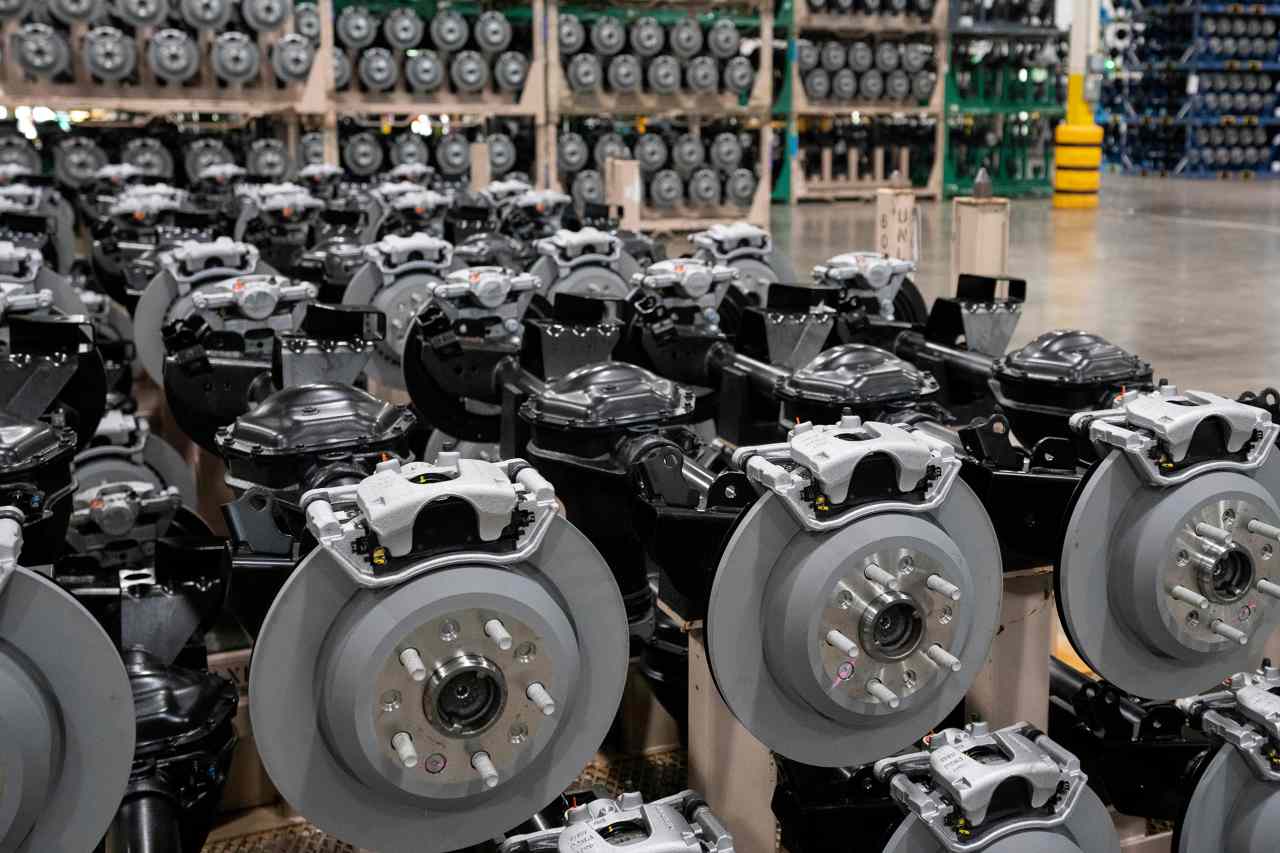
Dana, yielding 2.4%, makes driveline components including axles and electric motors for light vehicles and big rigs. It’s selling a unit focused on construction machines, and new CEO R. Bruce McDonald says he will reduce leverage. “This is a transformational opportunity for Dana to move out of, I’d say, the trailer park into the top neighborhood of automotive suppliers,” he said recently at a conference. RBC Capital just upgraded the stock to Outperform from Sector Perform.
Write to Jack Hough at jack.hough@barrons.com . Follow him on X and subscribe to his Barron’s Streetwise podcast .
Comments
Post a Comment